You want to go where? The Oregon Coast? Oh, I have a lot to tell you. Come along—I’ll show you what to look for, where to stop, and a few things we never saw coming.
They call the Oregon Coast the People’s Coast because a landmark state law ensures that every inch is open to the public—all 363 breathtaking miles.
And breathtaking really is the word.
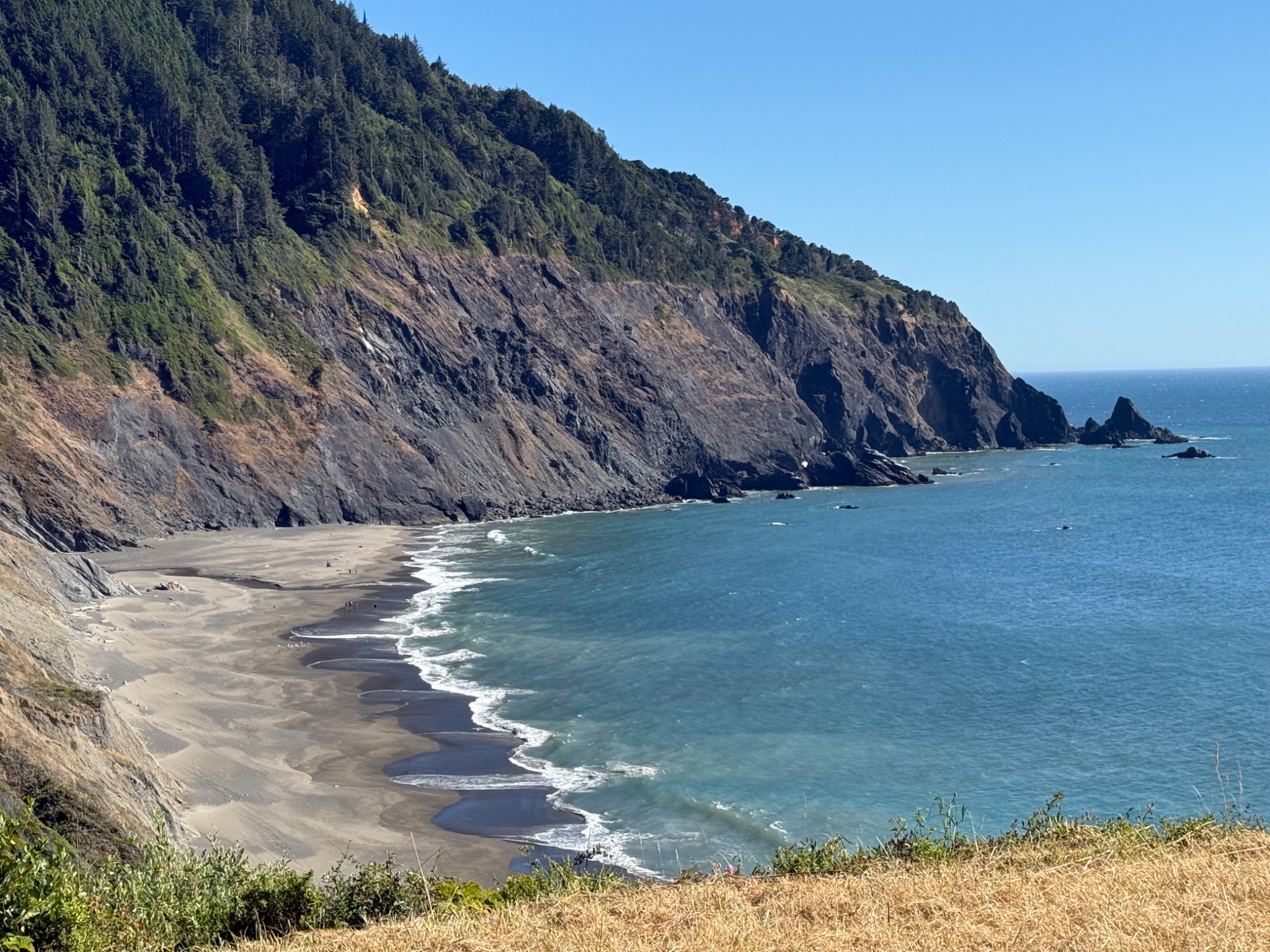
The Oregon Coast is not just beaches. It is dramatic cliffs dropping into the Pacific, rocky stretches of shoreline, giant sea stacks standing offshore, winding roads through thick evergreens, little fishing towns, quiet beaches, busy boardwalks, and trails that seem to disappear around every corner. Some places feel wild and completely untouched, while others are full of people, ice cream, arcades, and the kind of summer energy you can feel before you even get out of the car.
The coast is usually described in three sections: northern, central, and southern, and you will find fans of each area who will defend their favorite to the end. I understand that. Every section has its own personality, and honestly, I am not sure I could pick a favorite.
When I decided to spend a summer taking in the Oregon Coast, I felt a few emotions: joy, gratitude, and a whole lot of excitement. I opened up a map and immediately felt overwhelmed—and excited all over again.
How in the world was I going to see 363 miles of coastline without spending the entire summer parked on the side of the road?
Well, as it turns out, I almost did spend the entire summer parked on the side of the road.
When you decide to take this trip, I recommend breaking it up into three visits, each about a week long. There is simply too much to see, and if you try to do everything at once, you will spend most of your time saying, “We have to stop here,” followed three minutes later by, “Wait! We have to stop THERE!”
If you can only make one trip and go from Astoria to Brookings, hold on to your horses, because your eyes have not seen such beauty around every bend. My husband started laughing with me because we would literally drive for three minutes and I would want to pull over again. Having said that, I always recommend driving north to south so you are not crossing traffic every time you want to stop and pull off.
And trust me, you are going to want to stop.
The Northern Coast feels windy and wild, with rocky beaches, evergreens, and a peek around every trail. Each town has its own personality—in Oregon fashion, there is a place for everyone. The towns are related, but they are definitely not the same. It reminded me of a family: there is the quiet aunt who is lovely to find sitting in a sunny corner, learning something new, and then there is that nephew you run straight into the ocean with and laugh until your tummy hurts.
And that is exactly what makes this drive so much fun.
We started our adventure by crossing the Astoria–Megler Bridge, and apparently this was going to be a much bigger deal than I had anticipated.
My husband and son were doing their absolute best to pretend they were not nervous about crossing into Washington.
“Why do we need to go to Washington?”
“We’ve been to Washington before.”
“Do we even have time?”
“Is that going to take a long time?”
I was loving every minute of it.
“It takes six minutes!”
And besides, we had never been to that part of Washington.
I mean, technically, we were just crossing a bridge. But judging by the conversation happening in the car, you would have thought I had announced that we were moving there.
The Astoria–Megler Bridge is quite a sight. It stretches across the Columbia River, and from the car you get this incredible feeling that you are leaving one adventure and crossing directly into another. The bridge itself becomes part of the experience—and once we made it to the other side, I was pretty pleased with myself for getting everyone safely into Washington and, more importantly, getting them back.
Then we headed back toward Astoria.
And that’s when things got weird.
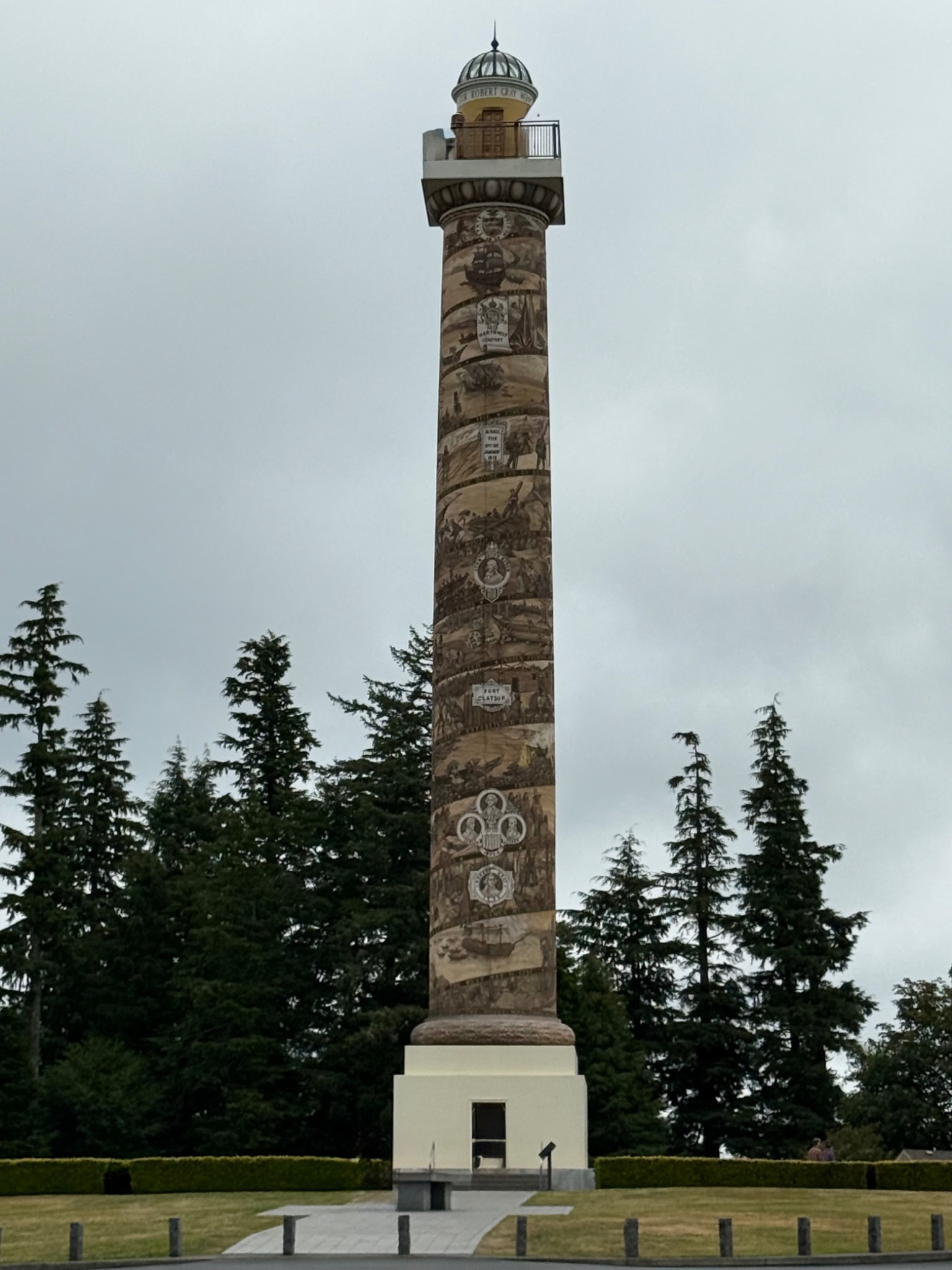
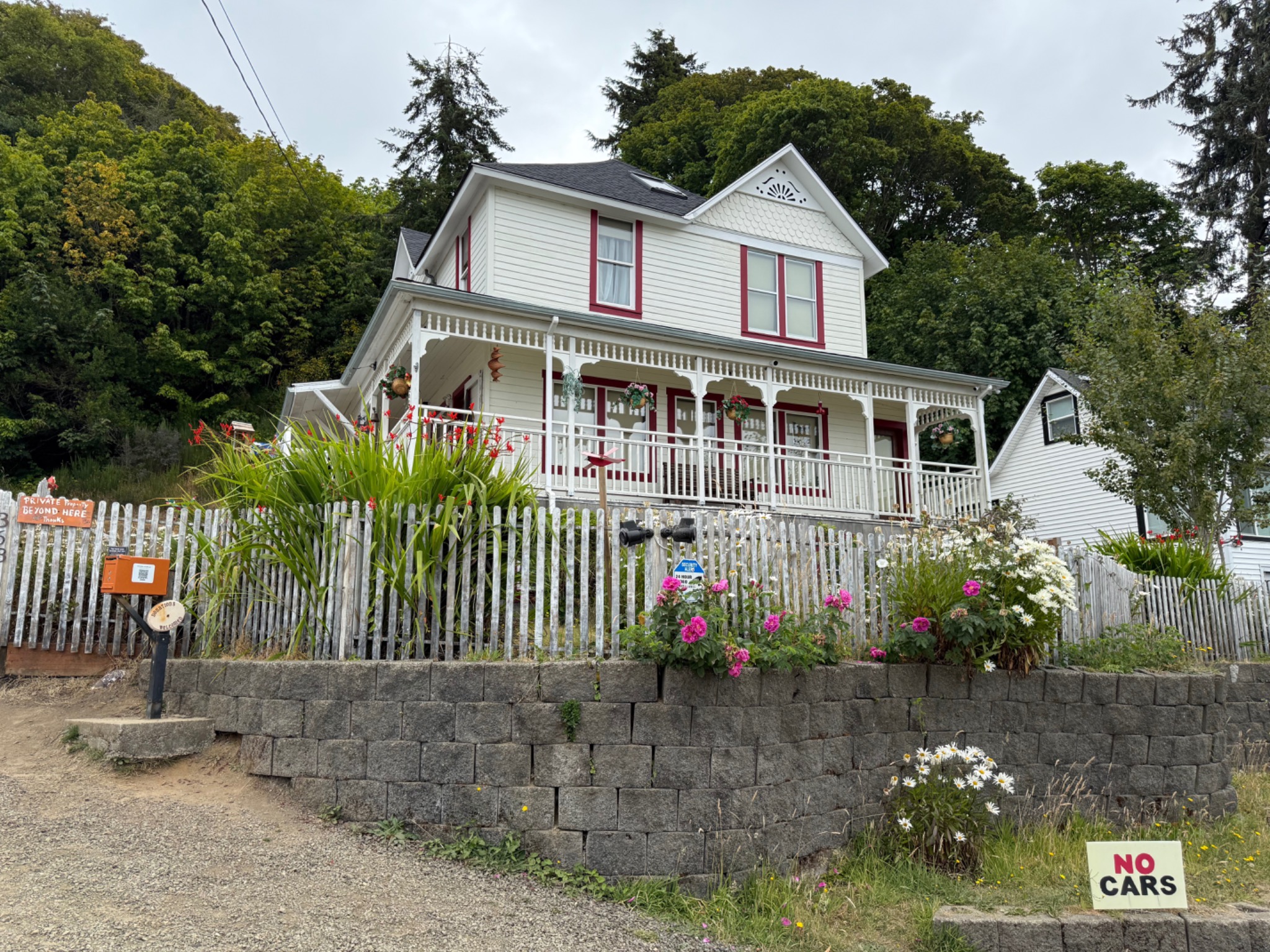
Astoria is historic, a port town, and just plain quirky and bizarre—like pirates turned into hippies somewhere along the way.
One night after dinner, we were walking back to our hotel when we heard strange noises. We walked closer and could not believe our eyes. There was a man dressed as a jester climbing a very tall and very skinny conifer tree—think the most narrow Christmas tree you have ever seen—swaying back and forth in the wind because…he had a cello in his hand.
I mean, of course he did.
He played a full concert that night, ending with a very loud firework explosion. To be honest, the entire thing did not even feel real. We asked everyone in town who he was and what his name was, and NO ONE could give us that information. In a conspiracy-theory kind of way, I think they do not want visitors to know.
And honestly, I respect that. Some mysteries are better left unsolved.
Every road trip needs at least one mysterious cello-playing, tree-climbing jester.
Heading south, Gearhart feels like the quiet relative who does not need to announce that they have arrived. It has uncrowded dunes, fancy neighborhoods, and the oldest golf course west of the Mississippi. It is peaceful, understated, and very different from what comes next.
Then came Seaside, and Seaside most definitely does put on a show.
It is the “playground of the coast.” The arcade. The bustling streets. There is an energy here that the other coastal towns do not have. It is like a busy boardwalk—loud, sticky, and confusing, but so much fun to see. You feel like you are RIGHT in the middle of a summer festival and everyone has an ice cream cone in their hand.
It is the utopia for kids.
And, apparently, adults are perfectly capable of eating ice cream and enjoying the chaos.
With sticky fingers, full stomachs, and a tummyache from laughing so much, we left Seaside to start our adventure in Cannon Beach.
Of course, one of the first things we started looking for was the famous Cannon Beach bunnies.
Because why wouldn’t we?
Cannon Beach is one of those places where you should get out your wallet—but it is a definite must. Haystack Rock. Ecola State Park. The artsy little village. The enormous rock sitting out in the ocean. It is beautiful in a way that makes you want to stop every few minutes and look around all over again.
The first time we went, we wore our bathing suits and full wetsuits, with a raincoat over the top. People were laying out on the beach, and we laughed so hard because it was 65 degrees.
Apparently, we had packed for Oregon in a completely different season than everyone else.
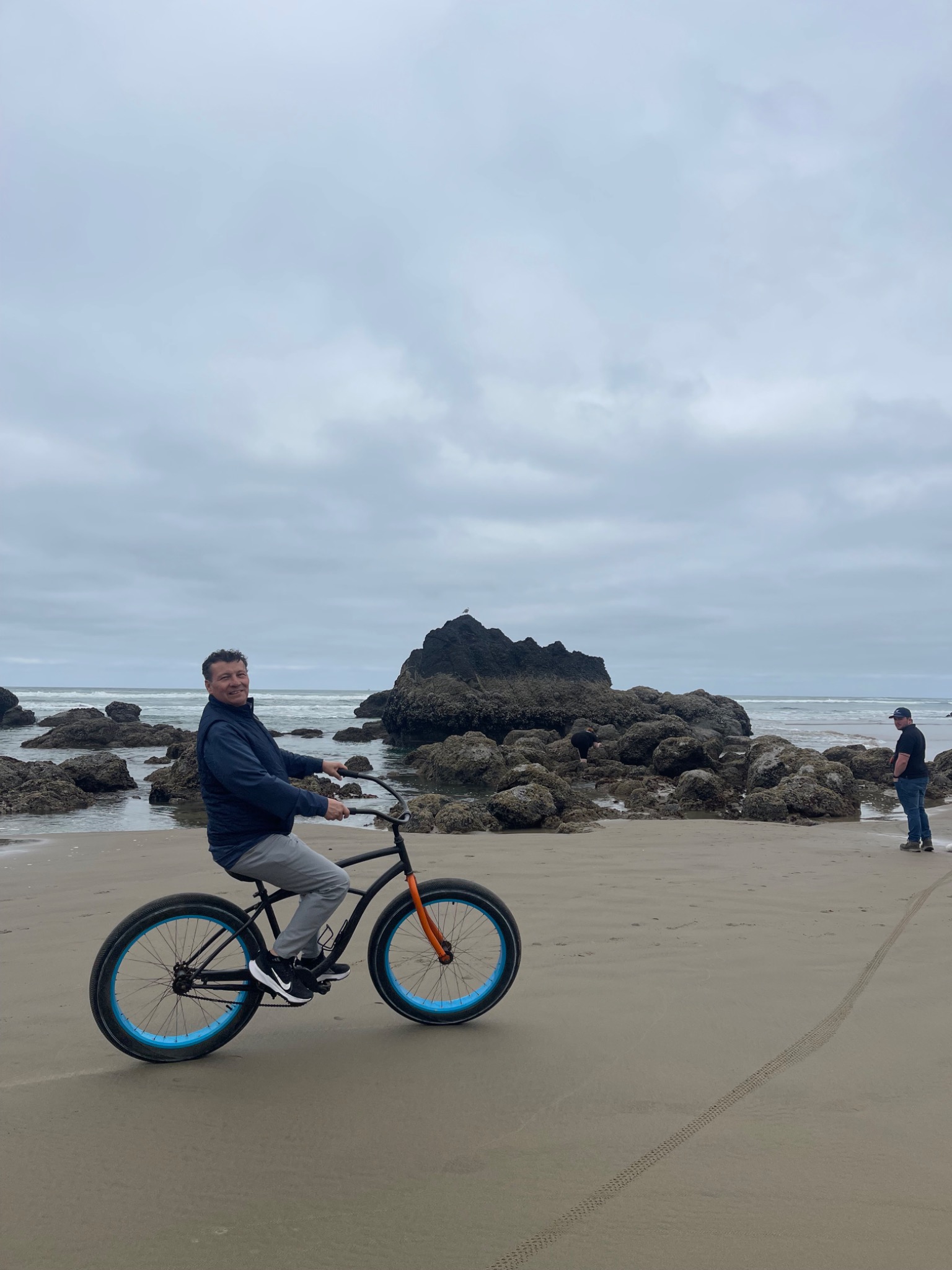
We rented fat-tire bikes and rode on the beach to Haystack Rock, then went tide pooling. Look for elk. And watch for the bunnies. Also—and I am just going to say this because it is part of the experience—there is Bigfoot here.
And a lot of bunnies.
Ask a local. Thank me later.
Ecola State Park is another must. Go hiking, have a beautiful picnic, and take a picture at Haystack Rock and Ecola State Park. This is the kind of place where you understand why people fall in love with the Oregon Coast.
Eventually, though, you have to get back in the car.
And that was one of the things I loved most about this drive. You leave one place thinking you have just seen the best part, and then ten minutes later you are pulling over again because apparently there is another view you absolutely cannot live without photographing.
South of Cannon Beach, Manzanita is tucked at the base of the mountain and has CHARM. The downtown is walkable but not overwhelming—you can find what you want without feeling like you have wandered into a shopping mall disguised as a beach town. If you are a Neahkahnie Mountain hiker, take note.
We did not stay here long, but even from the road you could feel that Manzanita had a different pace.
Nehalem was my mom’s favorite because of the antique shopping. It sits right on the river, with kayaking, river views, and fishing.
Although I still have one question: was the river named first, or the town?
I realize that may not be the most important question of the trip, but somebody should probably look into it.
Wheeler felt like the kind of tiny, peaceful village you would find in a book about a writer escaping to the coast to write while becoming an avid wildlife watcher. Well, that person is in Wheeler.
Nehalem Bay is lovely, and this whole stretch of the coast starts to feel a little quieter, a little slower, and a little farther away from everything.
Then we found Rockaway Beach.
This is another family-friendly beach, especially if your kids LOVE the sand. There are seven miles of open beaches here, and you are not going to find a busy hotspot downtown like Seaside.
This is:
“Kids, the beach is free. Go play.”
Not:
“Can I play a video game? Is there ice cream? Can I buy that toy?”
NO.
Look—water and sand.
Use your imagination and run free, wild child.
Further south, Garibaldi was another completely different personality.
Do you like trains and seafood?
Welp, you found your spot.
This is a fishing village where you can catch fresh seafood off the dock one day and ride the Oregon Coast Scenic Railroad the next.
Honestly, that sounds like a pretty good day to me.
Then there is Cape Meares, where the lighthouse is the reason to stop. It is one of those places that reminds you that some of the best parts of a road trip are the places you almost drive past.
And then comes Oceanside.
MUST stop.
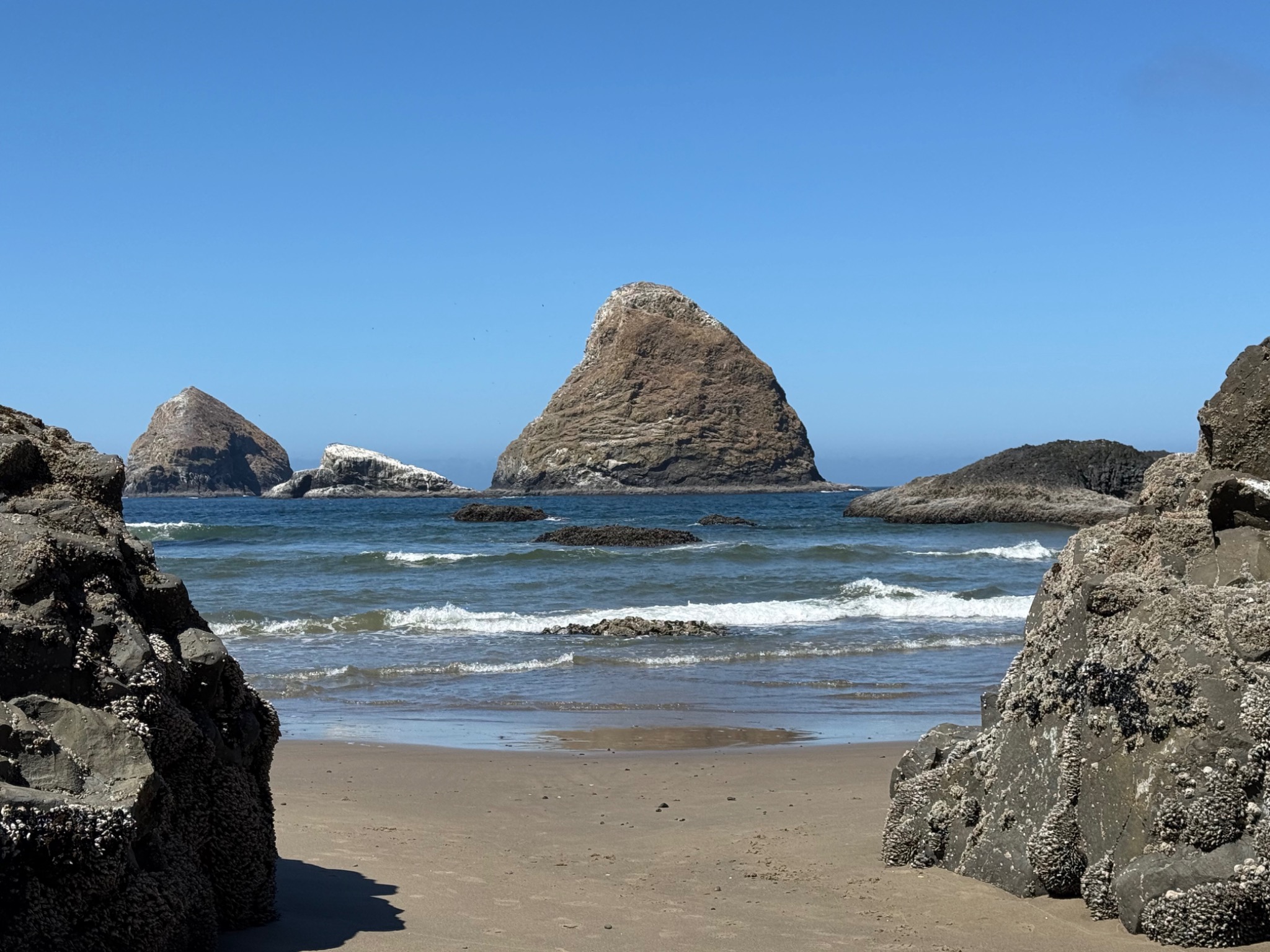
This is a dramatic cliffside community, and you have to go through the beach tunnel. Always check the tides. You walk down to the beach, head toward the end, and then walk through a tunnel in the rocks with little side holes or windows.
And when you get to the other side—
there is a SECRET beach.
It made me feel like I discovered it.
That is one of my favorite feelings when I travel. Not that I have found something nobody else knows about, but that for a little while it feels like I have.
Not far away, Netarts became one of my favorite surprises.
I loved it here.
It is a VERY small town—two restaurants and inexpensive hotels right on the beach. If you just want to CHILL and be left alone, go here. We played cribbage at the only bar, had a beer, and talked to all of the locals.
It felt like we had wandered into a place that belonged to the people who lived there and, for whatever reason, they let us stay awhile.
That is a secret gem in my opinion.
It is not fancy. There are quiet beachy strolls, and I think we were the only travelers in town.
If you do not want to go to the restaurant, in season you can go clamming and oyster harvesting and make your own fresh seafood meal.
There is something wonderfully Oregon about that.
Eventually, of course, we had to leave.
Then came Tillamook, and I am going to be honest: the whole situation smells like cow dung.
I stopped at a cute little store in town and said that to one of the workers.
He said, “That doesn’t smell like cow. That smells like money.”
Well.
There you go.
Obviously, go to the Tillamook cheese tour if you have enough time, you love dairy, and that touristy stuff is your jam.
Personally, I thought the “that smells like money” line was good enough to make the stop worthwhile.
And just when you think the coast could not possibly come up with another personality, you reach Pacific City.
Cape Kiwanda State Natural Area is the draw, along with massive sand dunes and a whole different kind of energy. This is what I said to my husband:
“Honey, we are in the big city!”
It has a city feel but also massive sand dunes, which is a pretty impressive combination. Surf? Stop here. Dory fishing boats launch directly into the surf.
And if you like having chain stores and a city with a beach, you should stay here.
By this point, I had completely stopped trying to predict what the Oregon Coast was going to look like around the next bend.
That was part of the magic.
We weren't just taking pictures. We were making memories—laughing, exploring, getting a little lost, and finding things we never expected. The kind of moments that stay with you long after the trip is over, and last longer than a picture.
One minute we were in a bustling beach town eating ice cream, the next we were looking for bunnies, then standing in front of a lighthouse, crawling through a tunnel to find a secret beach, playing cribbage in a tiny bar, laughing about the smell of cow dung, and stopping yet again because I had spotted something beautiful.
We probably drove three minutes at a time.
Maybe less.
My husband had already figured out that when I said, “Oh my gosh—look at that,” we were probably pulling over.
And honestly?
That is exactly how I think you should drive the Oregon Coast.